
Why GMP considerations should start during process development.
As bioprocesses move from research into clinical and commercial manufacturing, process data, equipment traceability, and software integrity become increasingly important.
For development teams working in biopharma, cell therapy, or other highly regulated industries, selecting a bioreactor platform that can support future qualification activities helps reduce risk during technology transfer and scale-up.
As development programmes progress towards regulated manufacturing, the decisions made during early process development can significantly influence the ease of validation, qualification and technology transfer. Choosing a GMP benchtop bioreactor from the outset can help reduce future implementation challenges and support a smoother transition from R&D to production.
What is a GMP benchtop bioreactor?
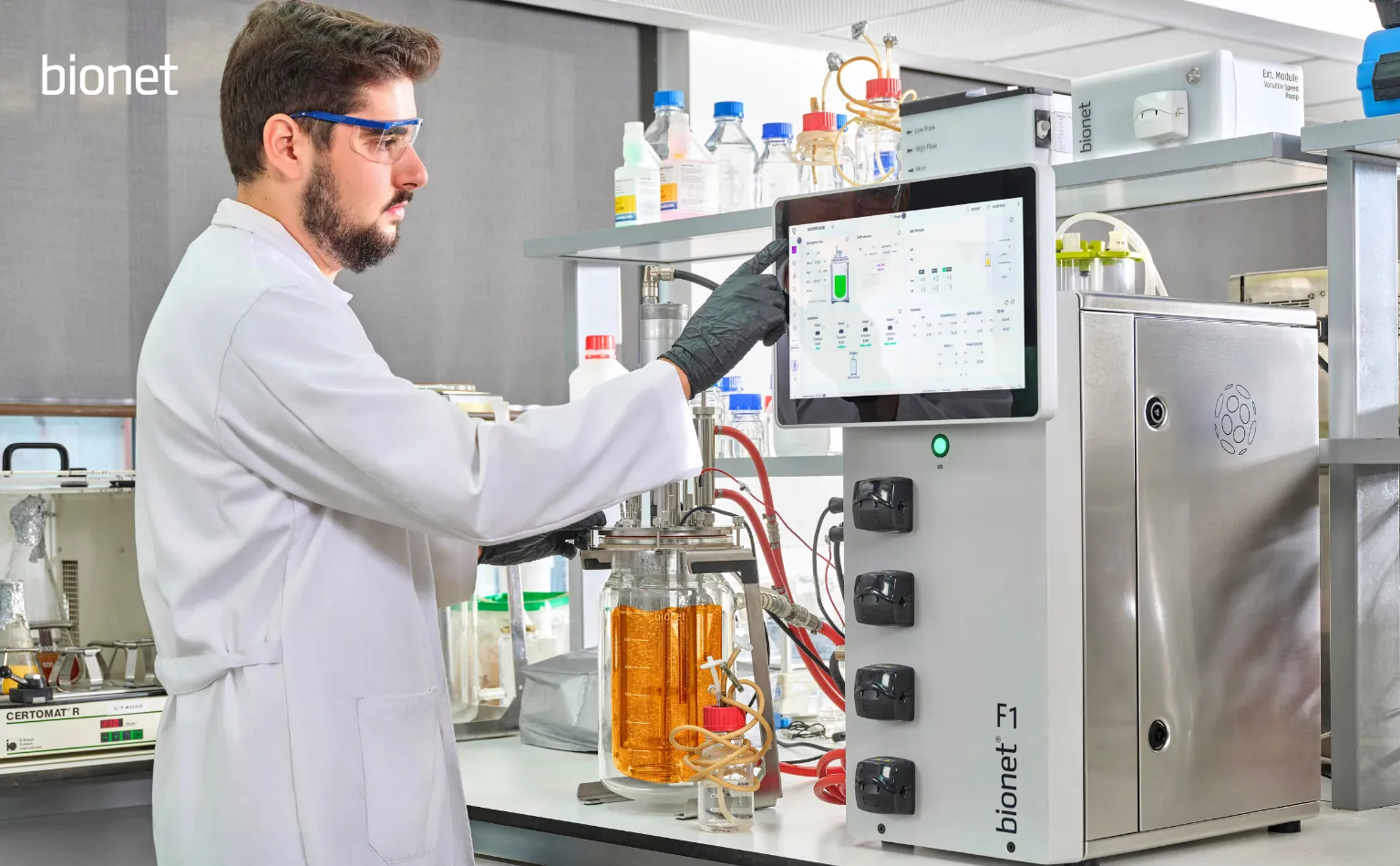
A GMP benchtop bioreactor is designed to support process development in regulated environments while facilitating the transition from research to GMP manufacturing.
Key Regulatory Requirements for GMP Benchtop Bioreactors
Biopharmaceutical and cell therapy manufacturers operating in regulated environments must consider several guidelines and regulations when selecting equipment for GMP process development. While the specific requirements depend on the intended application and market, the following frameworks are commonly considered when evaluating a GMP bioprocess system:
Good Manufacturing Practice (GMP)
Good Manufacturing Practice (GMP) establishes the quality standards for manufacturing medicinal products, ensuring they are consistently produced and controlled according to regulatory requirements. Selecting equipment that supports GMP requirements from the early stages of process development can help simplify qualification and future technology transfer.
GAMP 5
GAMP 5 (Good Automated Manufacturing Practice) provides guidance for the validation and lifecycle management of automated systems used in regulated industries. It promotes a risk-based approach to ensuring that software and computerized systems are fit for their intended use.
EU GMP Annex 11
EU GMP Annex 11 outlines the requirements for computerized systems used in GMP-regulated environments. It covers areas such as user access management, audit trails, data security, backup, and system lifecycle management to help ensure data reliability and integrity.
21 CFR Part 11
For companies operating in or supplying the United States, 21 CFR Part 11 defines the FDA (U.S. Food and Drug Administration) requirements for electronic records and electronic signatures. Software supporting regulated operations should provide functionality that helps users meet these requirements, including secure user management, audit trails, and electronic signatures where required.
The F1 can be supplied with an optional software upgrade that provides functionalities supporting compliance with 21 CFR Part 11 requirements for electronic records and electronic signatures.
Data Integrity (ALCOA+)
Data integrity is a fundamental principle of GMP. The ALCOA+ principles ensure that electronic records are Attributable, Legible, Contemporaneous, Original, Accurate, as well as Complete, Consistent, Enduring, and Available. Features such as audit trails, controlled user access, and secure data management help support these principles throughout process development and manufacturing.
Documentation Requirements for a GMP Benchtop Bioreactor
A GMP benchtop bioreactor should be supported by documentation that facilitates qualification activities and demonstrates the traceability of critical components. The exact documentation required will depend on the intended application and regulatory environment.
The F1 hardware architecture can be supplied with enhanced quality documentation packages that support GMP-oriented projects and qualification activities.
Depending on project requirements, the available documentation for GMP validation may include:
- Material traceability for product-contact components
- Material certificates 3.1 for stainless steel parts
- Surface roughness declarations
- FDA conformity documentation for elastomers
For customers operating outside pharmaceutical GMP environments, a lighter documentation package can also be provided. This typically includes material declarations, data sheets, roughness information, and FDA documentation without the full scope of pharmaceutical GMP certification requirements.
This flexibility allows customers to select the level of documentation required by their quality system and regulatory environment.
Essential Software Capabilities for GMP Process Development
A GMP-ready bioreactor requires more than hardware documentation. Data integrity and controlled operation are equally important. Software should support secure user management, traceability, controlled process execution and reliable data storage.
Rosita 2.0 includes functionality that supports GMP-compatible operation, including:
- User management with configurable access levels
- Audit trail functionality
- Recipe version control
- Batch reporting
- Data backup and recovery tools
- Centralized management of multiple bioreactors
For regulated environments, an optional software upgrade provides functionalities supporting compliance with 21 CFR Part 11 requirements for electronic records and electronic signatures.
Learn more about Software Rosita 2.0 and its functionalities
How does a GMP-ready system simplify scale-up?
One of the key challenges in bioprocess development is ensuring that the knowledge generated at laboratory scale can be transferred efficiently to pilot and manufacturing environments. Selecting a benchtop bioreactor that supports both process development and future qualification can help minimise rework as projects progress towards regulated production.
A GMP system should provide more than reliable process control. Documentation, data integrity, software functionality, and compatibility with Process Analytical Technologies (PAT) all contribute to preserving process knowledge and facilitating technology transfer between development and manufacturing teams.
The F1 has been designed with these requirements in mind. By combining advanced automation, PAT capabilities, comprehensive documentation packages, and GMP-oriented software functionality, it supports process development while helping users prepare for future qualification activities.
Key Considerations When Choosing a GMP Benchtop Bioreactor
When choosing a GMP benchtop bioreactor, organisations often focus on process performance while underestimating the importance of quality documentation, software functionality, data integrity, and qualification support. Avoiding these common mistakes early in process development can help reduce implementation challenges and simplify the transition to regulated manufacturing.
| Evaluation Criteria | What to Look For |
|---|---|
| Hardware | Equipment designed for regulated process development, with material traceability, suitable material selection, and design supporting qualification activities. |
| Documentation | Material traceability, material certificates (e.g. EN 10204 3.1), surface roughness declarations, FDA conformity documentation where applicable, and qualification support. |
| Software | Controlled operation through user management, audit trails, recipe version control, secure data management, and backup capabilities. |
| Data Integrity | Features supporting ALCOA+ principles, including controlled user access, traceable electronic records, and secure data storage. |
| Qualification & Validation | Documentation and software functionality that facilitate equipment qualification and validation throughout the project lifecycle. |
| Technology Transfer & Scale-up | A platform that preserves process knowledge and supports efficient transfer from process development to pilot and manufacturing environments. |
| Regulatory Support | Alignment with GMP expectations and optional functionality supporting 21 CFR Part 11 requirements, where applicable. |
How the F1 Supports GMP Process Development
Many companies begin their projects without a formal GMP requirement, only to discover later that additional documentation, traceability, or qualification evidence is required.
The F1’s GMP architecture allows users to build this foundation from the beginning, ensuring that future regulatory expectations can be addressed more efficiently as projects evolve.
| Key requirement | How the F1 supports GMP validation |
|---|---|
| Hardware | GMP-compatible design supporting qualification activities, material traceability, and PAT integration for regulated process development. |
| Documentation | Material traceability, EN 10204 3.1 material certificates, surface roughness declarations, FDA conformity documentation, with documentation packages tailored to project requirements. |
| Software | Rosita 2.0 supports user management, audit trails, recipe version control, batch reporting, data backup, multi-bioreactor management, and optional functionality supporting 21 CFR Part 11 requirements. |
| Qualification support | Documentation and software designed to facilitate qualification activities and support future GMP requirements. |
| Scale-up | Supports technology transfer from process development to pilot and manufacturing by combining process control, documentation, and data integrity. |
