
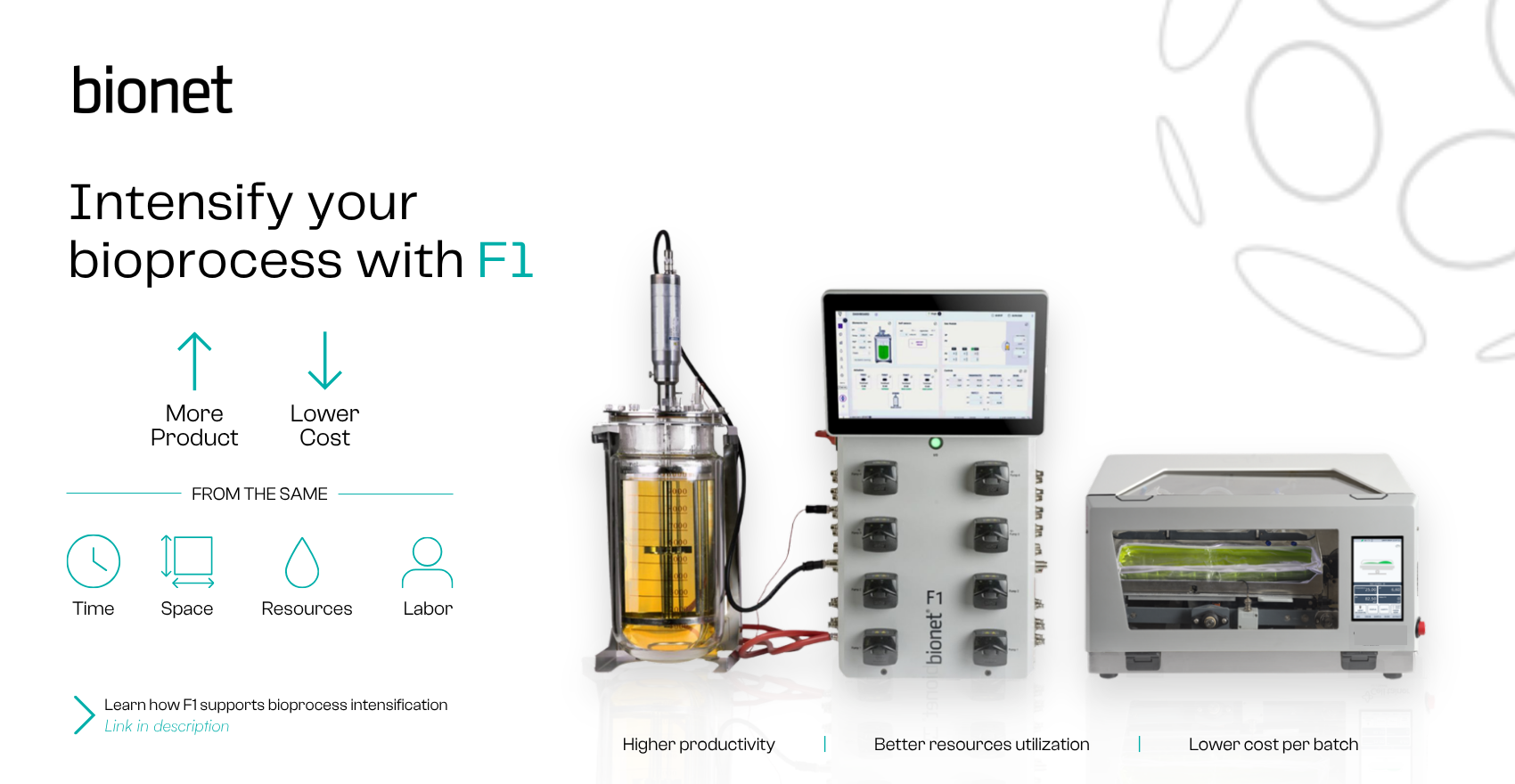
The demand for biologics, cell therapies, and alternative proteins continues to grow, but simply building bigger facilities or installing larger bioreactors is no longer always the answer. Manufacturing space is limited, development timelines are tight, and the cost of scaling up keeps increasing.
As a result, the focus has shifted from “How can we make bigger batches?” to “How can we get more from the process itself?” This question has driven the growing interest in bioprocess intensification. It’s a set of approaches aimed at increasing productivity and making better use of available resources.
What Is Bioprocess Intensification?
Bioprocess intensification refers to strategies and technologies that increase process productivity and efficiency. Instead of simply increasing vessel size or adding more equipment, intensified processes aim to make better use of existing capacity through smarter cultivation and downstream operations.
What Are the Benefits of Bioprocess Intensification?
The main goal of process intensification is to produce more with fewer resources. Higher productivity can translate into increased yields, shorter production times, lower manufacturing costs, and better utilisation of facility space.
These improvements contribute to a lower Cost of Goods (COGs) — the total cost of manufacturing a product, including raw materials, media, labour, utilities, equipment, and facility operation. By increasing product output from the same manufacturing footprint, intensified processes help reduce COGs by improving resource utilisation and lowering the production cost per unit.
Intensified processes also help manufacturers improve process consistency and respond more easily to changing production demands.
Where Bionet fits in
In 2025, Bionet hosted a dedicated workshop on Bioprocess Intensification in Industrial Biotechnology, bringing together development scientists to explore what PI demands in practice at bench scale. The recurring theme was straightforward: teams need, at development scale, the same depth of control and monitoring they expect from production systems.
The Bionet F1, together with its modular ecosystem, is designed to close that gap. Here is how each capability maps to the demands of PI work at the development scale.
Specific F1 Features Supporting Intensified Bioprocess Development
Enable Stable Continuous Processing
Traditional batch processes eventually reach a point where nutrient depletion and waste accumulation limit productivity. Continuous cultivation strategies such as perfusion overcome these limitations by maintaining cultures in their optimal operating state for extended periods.
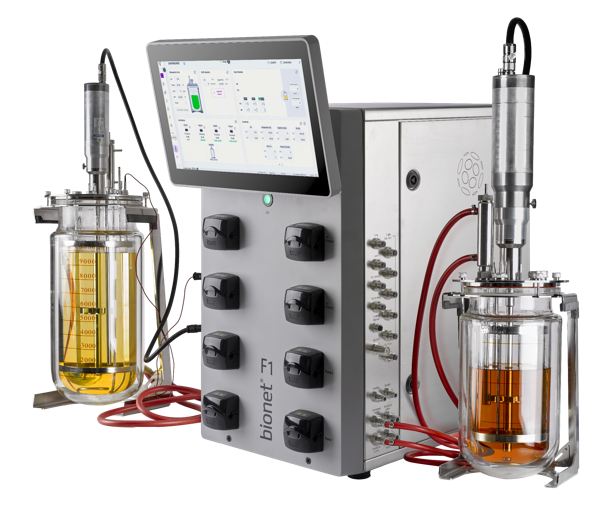
The Bionet F1 is designed to support perfusion processes for mammalian and plant cell cultures, as well as fed-batch and continuous process for microbial fermentation, providing the automation and control required for stable long-term operation.
Build a Reliable Perfusion Platform
Perfusion needs more than continuous media exchange. Reliable operation depends on the bioreactor, cell retention device, pumps, sensors, and control software all working together, with sterility maintained throughout the cultivation.
The bioreactor is designed to connect directly with external cell retention devices such as ATF systems, along with the accessories they require. F1 controls and monitors the key process parameters for perfusion, giving you a practical setup for developing and optimizing perfusion strategies.
Maintain Stable Volume During Long Continuous Runs
Maintaining a constant working volume is one of the biggest challenges in long-term continuous bioprocesses. Small pump inaccuracies can accumulate over days or even weeks, affecting Cell-Specific Perfusion Rate (CSPR), feeding accuracy, and overall process consistency.
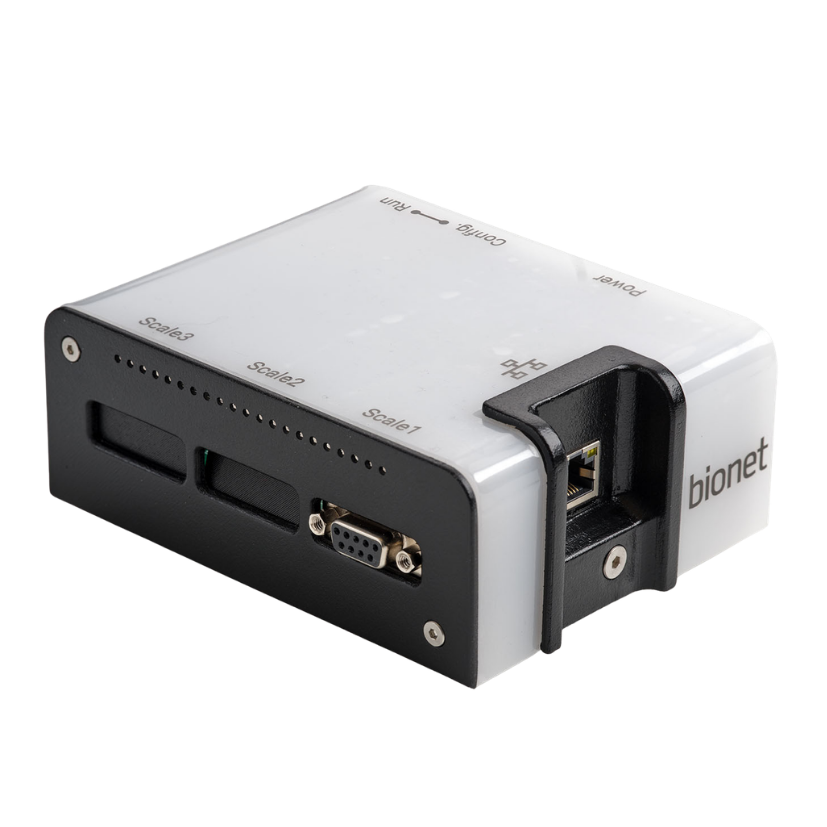
With bScale, F1 continuously measures vessel weight and automatically compensates for volume deviations using gravimetric control, ensuring stable process conditions and improved experimental reproducibility.
The same gravimetric approach also enhances fed-batch processes by controlling feed additions based on actual vessel weight rather than pump runtime, improving dosing accuracy and minimizing errors caused by pump drift.
Control Cell Viability in Real Time
Offline cell counting provides only periodic snapshots of culture performance, making it difficult to respond quickly to changes in viable cell concentration during perfusion.
Through integration with a viable cell density sensor, F1 provides continuous online measurements. This enables closed-loop CSPR control, supports automated feeding strategies, and reduces reliance on manual sampling while improving process consistency.
Prevent CO₂ from Limiting Productivity
In high-density mammalian cell cultures, dissolved carbon dioxide (dCO₂) can accumulate to levels that negatively affect cell metabolism, viability, productivity, and product quality. Continuous dCO₂ monitoring is therefore essential for understanding culture performance and maintaining optimal process conditions.
F1 supports continuous dissolved CO₂ monitoring, allowing researchers to detect CO₂ accumulation early and adjust operating conditions before cell performance is compromised. This provides deeper process insight and improved control of intensified mammalian cell cultures.
Get Real-Time Insight into Microbial Metabolism
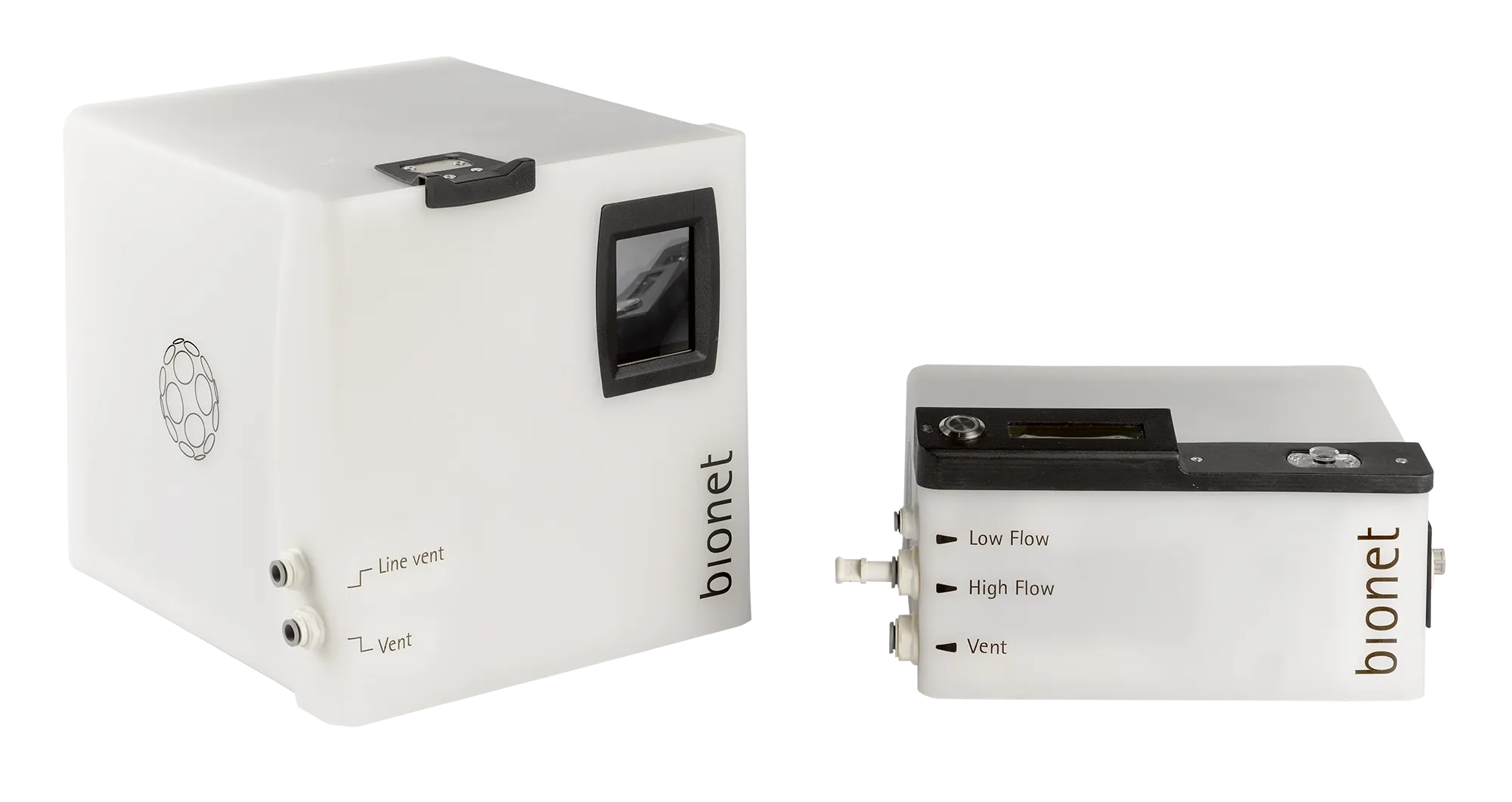
The bBreath exhaust gas analysis module continuously measures O₂ and CO₂ concentrations in the exhaust gas, automatically calculating Oxygen Uptake Rate (OUR), Carbon Evolution Rate (CER), and Respiratory Quotient (RQ) to provide real-time insight into culture metabolism.
In continuous processes, these parameters help verify steady-state operation, detect metabolic shifts, and support more informed process optimization. In fed-batch processes, they provide early indication of substrate depletion, enabling more accurate feed initiation and improved process consistency.
Maintain Optimal Biomass Throughout the Process
In intensified microbial cultivations, maintaining the right biomass concentration is essential for maximizing productivity, ensuring consistent process performance, and preventing overgrowth or nutrient limitation.
F1 supports continuous online optical density (OD) monitoring for real-time biomass measurement. In fed-batch processes, biomass measurements enable growth-responsive feeding strategies, while in continuous cultivations they enable automated turbidostat operation to maintain a constant cell density throughout the process.
Accelerate Process Development with Parallel Bioreactors
Process intensification requires evaluating multiple variables, including feeding strategies, perfusion rates, media formulations, and cell retention settings. Testing these conditions sequentially can significantly extend development timelines.
With F1, multiple bioreactors can be controlled in parallel from a single Rosita 2.0 software environment, enabling simultaneous evaluation of different process conditions. This increases experimental throughput, improves data consistency by reducing run-to-run variability, and shortens the path from process development to scale-up.
Explore Multi-Bioreactor Configurations
Learn more about Rosita 2.0 Software
Connect Process Data with Intelligent Automation
Modern intensified bioprocesses generate increasing amounts of process data that must be transformed into actionable decisions. Managing multiple sensors, control loops, and process variables manually quickly becomes impractical.
Rosita 2.0 provides a configurable automation environment that brings together process control, advanced calculations, scripting, soft sensors, and PAT integration within a single platform. This enables researchers to automate complex cultivation strategies while maintaining full visibility and control throughout the process.

Ready to Intensify Your Process?
Whether you are developing a high-cell-density culture, implementing perfusion, or looking for more efficient downstream workflows, the right combination of technologies can help you unlock higher productivity and make better use of your manufacturing capacity.
