
Perfusion processes are becoming increasingly important in biopharmaceutical manufacturing. By continuously supplying fresh medium while removing waste products, perfusion culture enables higher cell densities, increased productivity, and more consistent product quality.
However, perfusion also introduces additional complexity. Feed rates, harvest flows, bleed strategies, and cell retention systems must work together continuously, making manual operation difficult and time-consuming.
Why Automation Matters in Perfusion Processes
Successful perfusion processes depend on maintaining stable conditions over extended cultivation periods. Automation helps reduce operator intervention, improve reproducibility, and ensure process consistency.
Modern perfusion control software allows researchers to automate repetitive tasks, execute complex strategies, and respond to process changes in real time. This simplifies process development while reducing the risk of human error.
Key Perfusion Automation Capabilities
Rosita 2.0 provides tools designed to simplify perfusion operation and process intensification.
1. Maintain a stable CSPR or VCD without constant manual adjustments
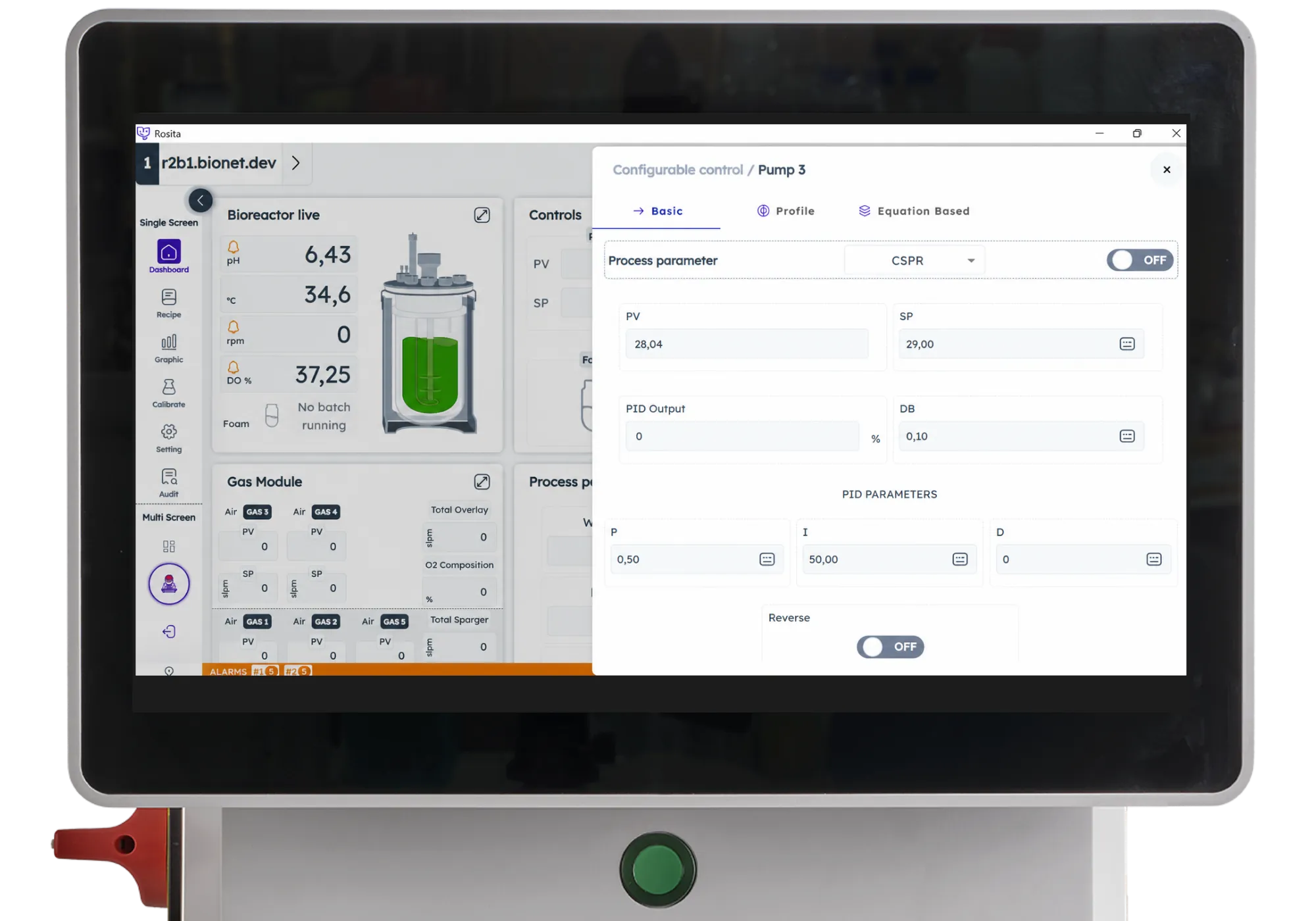
In perfusion processes, maintaining the desired Cell-Specific Perfusion Rate (CSPR) or Viable Cell Density (VCD) often requires frequent pump adjustments as culture conditions change. Manual intervention not only consumes valuable researcher time but also introduces variability between runs.
With Rosita 2.0, any pump can be configured to automatically respond to virtually any measured or calculated process parameter. The software continuously adjusts pump speed to maintain your desired process target, eliminating the need for external controllers or custom programming.
For example, the feed pump can automatically maintain a target VCD or regulate CSPR calculated as a soft sensor, ensuring stable process conditions throughout cultivation.
2. Automate complex feeding strategies without programming
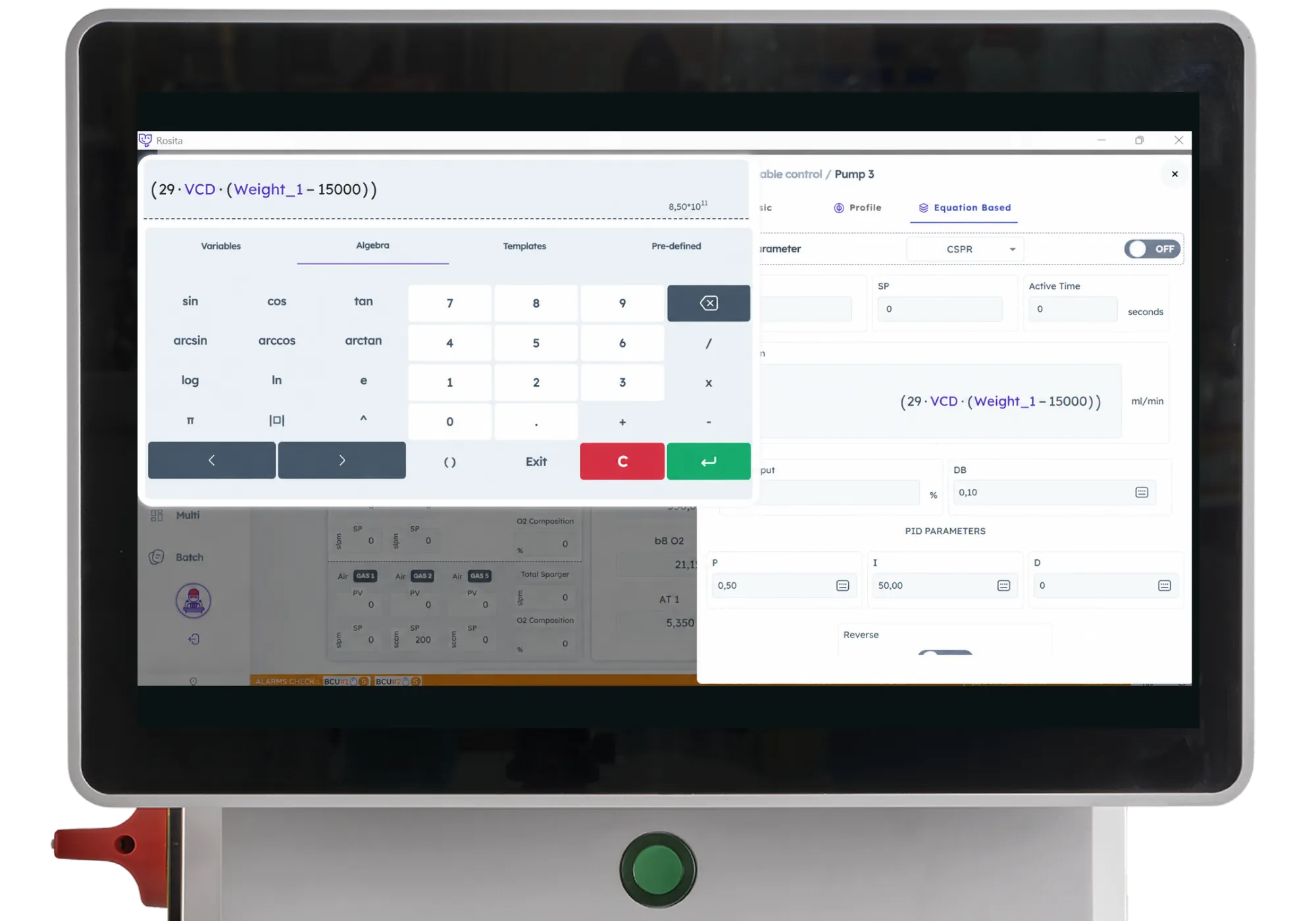
Perfusion strategies often require pump rates that depend on multiple process variables rather than fixed setpoints. Implementing these calculations traditionally requires external software, scripting, or PLC programming.
Rosita 2.0 allows researchers to create equation-based control strategies directly within the software using mathematical expressions. Pump outputs are continuously recalculated using live process data, enabling sophisticated feeding and harvesting strategies without writing code.
Typical applications include gravimetric feeding using bScale, harvest-to-feed ratios, bleed control, or custom perfusion calculations.
3. Create new process variables from existing measurements
Many critical perfusion parameters such as CSPR, specific consumption rates, or working volume, are not measured directly by sensors. Researchers often calculate these values manually or offline, limiting their usefulness for real-time process control.
Rosita 2.0 enables users to define virtual process parameters, known as soft sensors, by combining existing measurements into new calculated variables. Once created, these parameters behave exactly like physical sensors: they can be visualized, recorded, used in recipes, generate alarms, or drive automatic control loops.
This allows important process indicators, such as CSPR or vessel volume derived from bScale measurements, to become active components of the automation strategy.
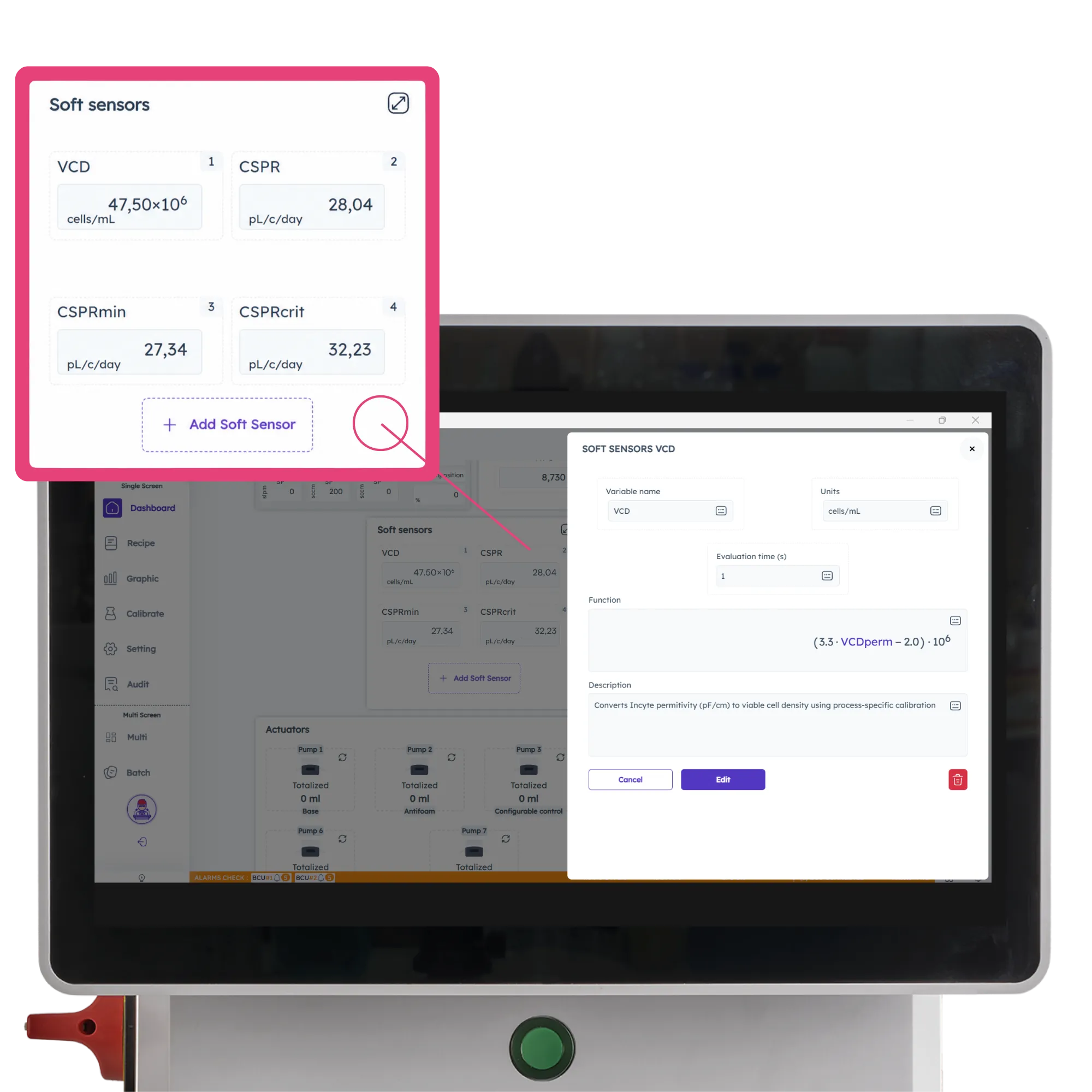
Here’s how to create soft sensors, then use them in equation-based control to automate feeding:
4. Automate process transitions
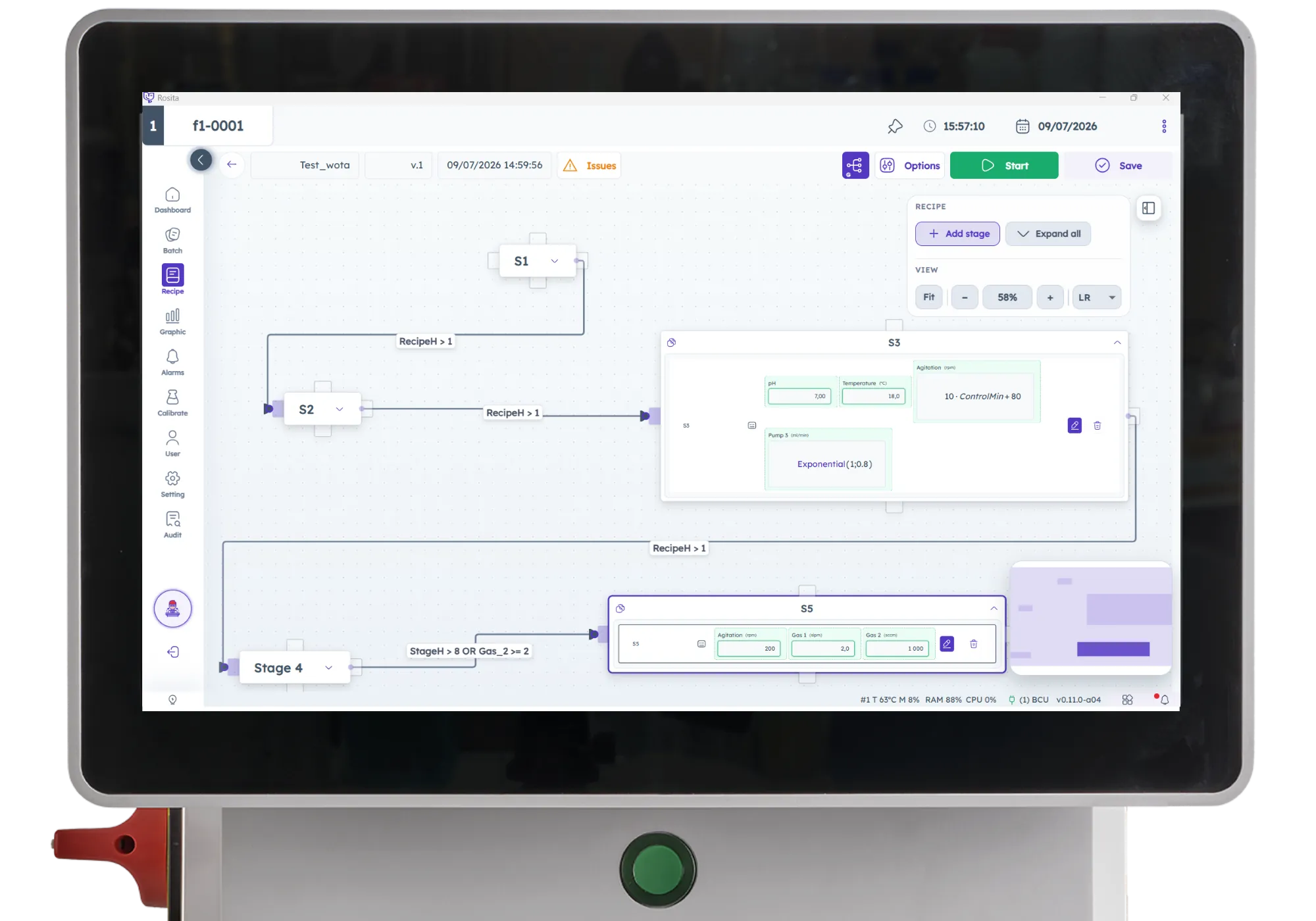
Many perfusion workflows cannot follow a fixed timeline because biological systems develop at different rates. Researchers often need to monitor the culture and manually initiate medium exchange, bleeding, or process transitions when certain conditions are met.
Rosita 2.0 allows process recipes to transition automatically based on real process conditions instead of predefined times. Each recipe stage can contain its own pump configurations, control strategies, and setpoints, while transitions occur automatically when user-defined criteria are reached.
For example, continuous perfusion can begin once VCD reaches a specified threshold, or bleed can start automatically when cell density exceeds a target value.
5. Develop perfusion processes faster through parallel experimentation
Optimizing perfusion processes often requires comparing multiple CSPR values, bleed strategies, media formulations, or cell retention configurations. Running these experiments individually significantly increases development time and operator workload.
Rosita 2.0 enables researchers to control and monitor up to 24 bioreactors from a single interface. Shared recipes, centralized monitoring, and standardized automation make parallel experimentation practical while ensuring consistent operation across every reactor.
This allows more process conditions to be evaluated in less time without increasing software complexity.
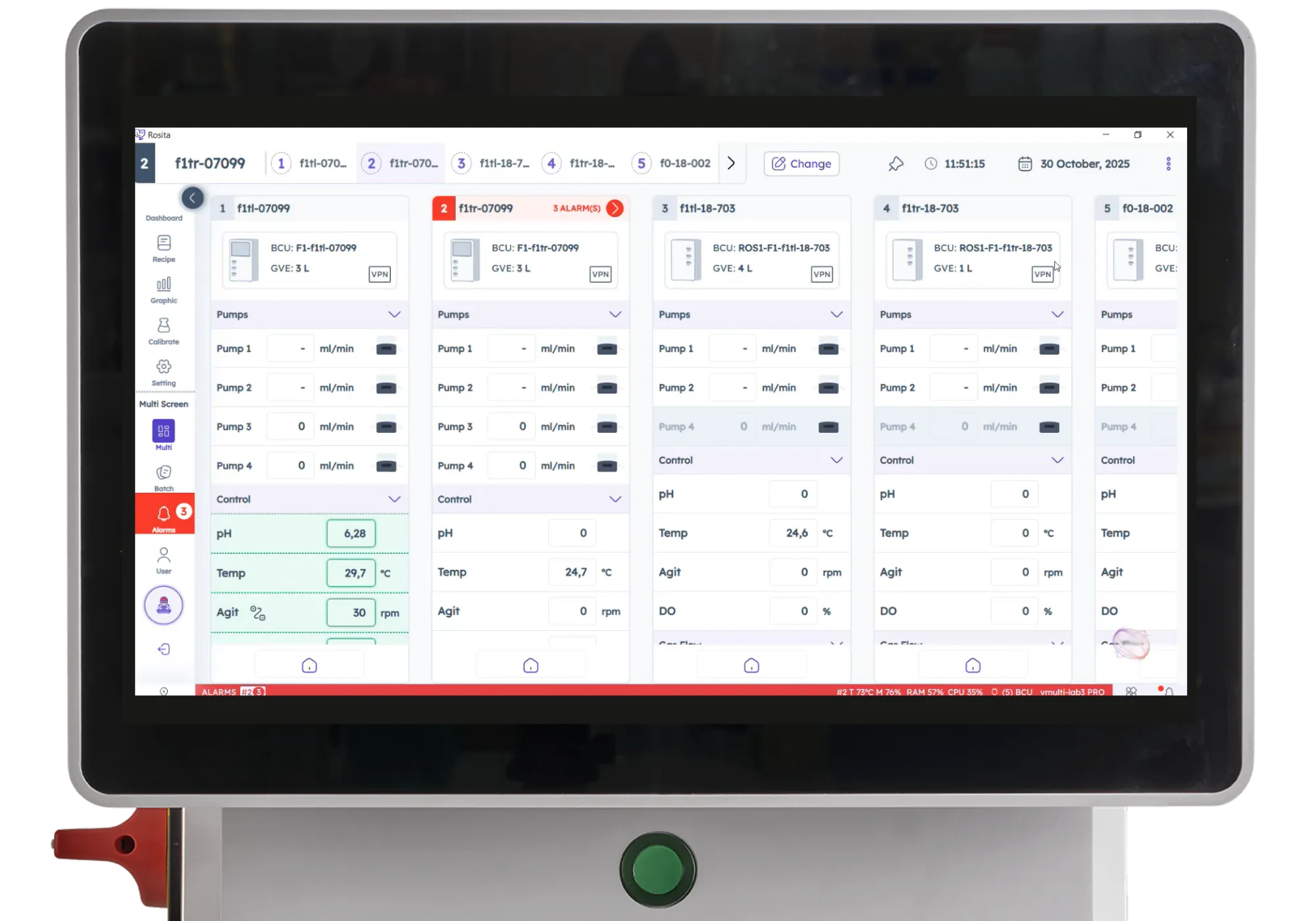
Simplifying Process Intensification
As perfusion processes become more common, automation plays an increasingly important role in making continuous operation practical at bench scale. By combining monitoring, control, and data management within a single platform, researchers can focus more on process development and less on manual operation.
Rosita 2.0 was developed to help simplify perfusion workflows and support the transition from conventional fed-batch processes to intensified continuous bioprocesses.
Looking for the right perfusion automation strategy?
